Car Sort: Color Puzzle
Rollic GamesPuzzle
4.4205.00 Reviews
- Version
- 1.2.7
- Installs
- 500.00K
- Age Rating
- Everyone
Screenshots
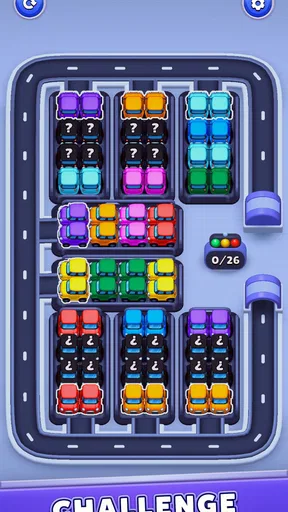
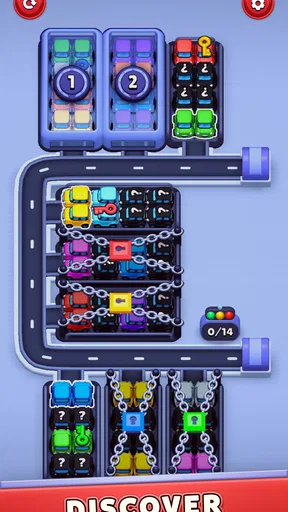
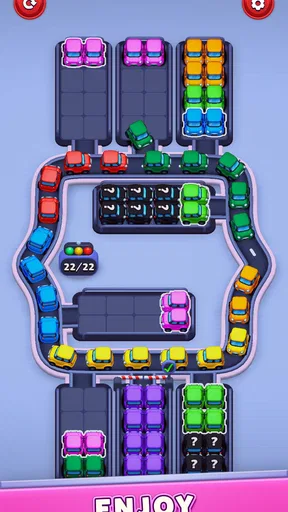
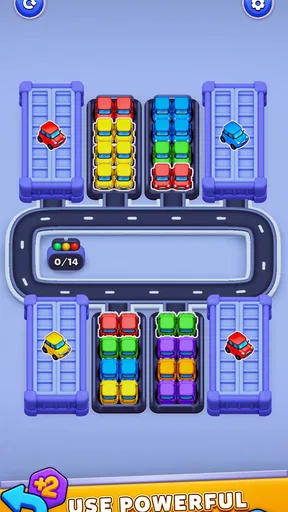
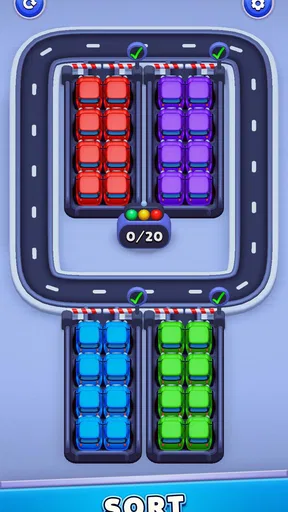
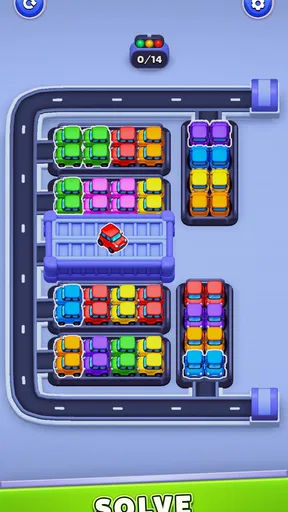
Our Review of Car Sort: Color Puzzle
 Analysis by Appyee
I spent time with Car Sort: Color Puzzle as a casual sorting game, and its appeal became clear very quickly: it turns a familiar traffic problem into a compact color-matching challenge. The basic idea is easy to understand, but the order in which I moved cars mattered far more than I expected. A careless tap can create a traffic jam that looks harmless at first and becomes difficult to recover from a few moves later.
This is a free puzzle game from Rollic Games, rated for Everyone, and it fits the kind of short session I would play while waiting for an appointment or taking a break from a longer game. Its store summary asks whether you are ready to sort the traffic, while the short description reduces the concept to “Car Sort.” That simplicity is accurate, but it does not fully explain the small planning decisions that make each level satisfying.
My overall impression is positive, with an important qualification: this is best for players who enjoy repeated, visually clear sorting puzzles rather than people looking for a deep story, a large campaign, or a highly competitive experience. The game has a 4.4 average from around 13 thousand ratings, and its audience has passed 500 thousand installs. Those figures suggest that the straightforward format has found a solid audience, but they do not change the central question: do you enjoy thinking several moves ahead with very little decoration around the puzzle?
How the traffic-sorting workflow feels in practice
The first few rounds establish a comfortable routine. I look at the visible cars, identify which colors can be grouped, and decide whether a move opens space or merely shifts a problem somewhere else. The controls are approachable enough that I could begin without studying instructions, which is exactly what I want from a mobile puzzle designed for brief sessions.
The important habit is to stop treating every available move as equally useful. When several cars can move, I first search for the move that exposes another car or creates a complete color group. A move that only relocates a car may feel productive, but it can consume the room needed for a more important combination. This is where the game moves beyond simple tapping: the board rewards preparation more than speed.
I found it useful to divide a level into three mental stages. At the beginning, I inspect the whole arrangement and avoid committing too quickly. In the middle, I prioritize opening blocked colors and preserving flexible spaces. Near the end, I stop experimenting and use the remaining room carefully, because a single unnecessary placement can leave the final cars in an awkward order.
That workflow makes the game suitable for a realistic everyday situation. If I have only a few minutes, I can play one puzzle, put the phone down, and return later without needing to remember a complicated narrative. The trade-off is that a short session can still become surprisingly absorbing when I am close to solving a crowded arrangement. It is easy to tell myself that I will stop after one more attempt.
The visual clarity also helps when playing casually. Colors carry most of the information, so I do not need to read long instructions or memorize a collection of symbols. However, players who have difficulty distinguishing similar colors may find the central mechanic less comfortable than players who can identify each shade immediately. That is not a minor detail in a game where one mistaken visual judgment can affect the entire sequence.
What I check before making the first move
I begin by locating partially formed groups rather than immediately moving the most visible car. A nearly completed color is often more valuable than an isolated car because finishing it can free space and reduce the number of active problems. I also look for colors hidden behind other vehicles, since revealing the right car can completely change the best route through the level.
Another useful check is to count open destinations in my head. I do not need an exact mathematical plan, but I want to know whether I am preserving enough room to separate colors later. If the board already looks crowded, I avoid moves that create a new mixed stack unless that move clearly exposes something more useful.
This approach is more reliable than playing by instinct. Fast taps work on simple arrangements, but they become risky when several colors are interlocked. The game does not need complicated rules to create tension; limited space and ordering are enough.
Settings and device habits worth checking
There is one practical detail I always check with a mobile puzzle: whether the game feels comfortable on my particular screen. I make sure the display is bright enough to separate the car colors and that accidental touches are unlikely while I am holding the phone one-handed. Because the puzzle depends on precise visual sorting, a dim screen or distracting glare can make an otherwise manageable level feel unfair.
I also prefer to keep my play environment quiet when I am learning the game. The decisions are visual, but interruptions make it easier to forget which color I intended to expose next. When I return after a break, I take a few seconds to scan the whole arrangement again instead of continuing automatically from my previous assumption.
The game is free to download, with optional in-app purchases listed from $0.99 to $99.99 per item. That range is worth keeping in mind before handing the phone to a child, even though the content rating is Everyone. I would personally decide in advance whether purchases are appropriate on the device, especially because a simple puzzle can encourage “just one more try” thinking.
Car Sort: Color Puzzle runs on Android devices using version 7.0 or later. For someone using an older phone or tablet, checking compatibility before planning to play is sensible. On a supported device, the low-complexity concept makes it a natural fit for casual mobile use, though the quality of the experience still depends on screen size and color visibility.
The current version is 1.2.7, and I would keep the game updated through the normal app store process rather than relying on an old installation. Updates can matter for stability even when the core puzzle does not appear to change dramatically. I avoid assuming that a newer version will transform the game; the main attraction remains the sorting challenge itself.
Small habits that make early levels smoother
My most useful beginner habit is to separate “opening” moves from “finishing” moves. An opening move reveals information or creates working space. A finishing move completes a color group or places a car where it is unlikely to interfere later. When I confuse these two purposes, I tend to fill useful space too early.
I also try not to bury a color simply because its current position looks convenient. If a car can move into several possible places, I choose the destination that keeps the most future options open. This is a subtle advantage: flexibility is often more valuable than immediate visual neatness.
When I make a mistake, I replay the sequence mentally rather than blaming the final position. Usually the real error happened earlier, when I used a free space for a move that did not expose anything. That review turns failed attempts into practice and helps me recognize similar arrangements later.
Faster patterns, advanced limits, and who should play
I’d use this section to look beyond the first easy arrangements and consider what happens when a board offers fewer safe places to move. My best advice is to treat any temporary parking space as a limited resource, not an invitation to keep shuffling; that makes careful play more rewarding without turning it into a race. It also helps clarify whether this focused puzzle style is a good fit for you.
Recognizing repeatable patterns without rushing
Experienced play is not about tapping faster. It is about identifying the structure of a board before moving anything. I look for a color that is close to completion, a blocked vehicle that controls access to several others, and an empty area that can serve as a temporary buffer. Those three details often tell me which moves are safe and which ones are merely tempting.
A particularly useful pattern is the temporary parking move. I use it when moving one car aside reveals a more important color underneath. The move is not progress by itself, so I only make it when I know what the newly exposed space will accomplish. This prevents the common mistake of scattering cars across the board until no useful room remains.
Another pattern is to protect completed groups. Once I have a clean color arrangement, I avoid disturbing it unless the puzzle forces me to. A completed group is not just a visual reward; it reduces clutter and gives me a clearer view of the remaining traffic. Treating finished areas as protected zones makes later decisions easier.
I also plan around the least flexible color. Some cars have several possible destinations, while others can only fit into one useful place. I handle the restricted color first when possible, because leaving it until the end can produce a dead end. This is one of the clearest differences between casual play and deliberate play.
Where the strategy reaches its limits
No planning method removes every frustrating moment. If I misread a shade, forget a blocked car, or commit a buffer space too early, the position may become difficult to repair. The game’s simplicity means that the board itself carries most of the challenge; there are not many other systems to distract from a poor decision.
That can be satisfying for puzzle fans, but it may feel repetitive to players who need constant novelty. Someone looking for character development, exploration, narrative goals, or elaborate progression would probably be happier with a different type of mobile game. Car Sort: Color Puzzle is focused, and that focus is both its strength and its limitation.
I would also skip it if I dislike replaying similar arrangements to improve my approach. The pleasure comes from noticing patterns, correcting mistakes, and gradually becoming more efficient. If the idea of retrying a puzzle after one bad placement sounds irritating rather than rewarding, the straightforward format may not hold attention for long.
Compared with traditional match-three games, this title feels less dependent on quick reactions and more dependent on order. Match-three alternatives usually reward creating combinations from a changing board, while this game asks me to manage a visible arrangement with deliberate placement. Compared with classic block or tile puzzles, it is more constrained by color grouping and temporary space. That makes it a better choice for players who enjoy planning a sequence than for players who want constant board reshuffling.
It also differs from larger traffic-themed games. The traffic here is a puzzle metaphor, not a driving simulation. I am not managing lanes, steering vehicles, or building a city. The satisfaction comes from clearing visual congestion through careful sorting. That distinction matters if the phrase “traffic” makes you expect driving controls or management features.
Who gets the most from the game
I would recommend it to casual puzzle players who want an immediately understandable activity with enough planning to stay interesting. It works especially well for short breaks, quiet evening play, and anyone who likes arranging objects into clean groups. The Everyone rating also makes the concept approachable for a broad audience, although adults should still consider the purchase settings on a shared device.
It can be a useful choice for someone who wants a low-pressure mental exercise. I can play slowly, inspect the board, and improve through observation rather than reflexes. The game encourages a practical kind of concentration: hold several possible moves in mind, preserve space, and avoid making a decision simply because it is available.
I would not call it the best option for a player who wants a large amount of content variety in every session. Its identity is narrow by design. The same sorting principle remains at the center, so the long-term appeal depends on whether increasingly careful planning is enough motivation for you.
My final judgement after learning the rhythm
Car Sort: Color Puzzle succeeds because it makes a small idea feel more thoughtful than its presentation suggests. At first I treated it as a quick color game, but the better results came from slowing down, protecting open space, and deciding which cars should remain movable. Those habits give the game a modest but genuine learning curve.
The strongest reason to try it is its accessibility. It is free, easy to understand, suitable for Everyone, and available for supported Android devices from version 7.0 onward. Rollic Games has kept the premise direct: the player sorts traffic by color, and the challenge comes from choosing the right order. There is no need to learn a complex ruleset before enjoying the first puzzle.
The main caution is equally direct. Optional purchases can range from $0.99 to $99.99 per item, so I would review purchase controls before letting a child use the device. I would also avoid expecting a deep simulation or a story-driven campaign. This is a focused puzzle, not a broad entertainment package.
My recommendation is strongest for people who enjoy methodical sorting and want a game that can fit around everyday interruptions. Start by scanning the whole board, use temporary spaces only with a purpose, protect completed colors, and leave the least flexible arrangement until you understand how to handle it. Those simple habits make the difference between random movement and satisfying control.
After playing it this way, I see careful sequencing rather than quick tapping as the real skill. If that sounds appealing, this is an easy game to pick up and a surprisingly absorbing one to revisit. If you need richer variety, competitive depth, or action, a different puzzle category will suit you better. For a clean, compact color-sorting challenge, though, it earns a cautious recommendation.
Verdict
Strengths of Car Sort: Color Puzzle
- Simple sorting mechanics are easy to learn within the first few levels.
- Bright visuals make the colored cars easy to distinguish.
- Short levels work well for quick, casual play sessions.
- Increasing difficulty offers a steady challenge for puzzle fans.
- Offline play is convenient when no internet connection is available.
Limitations of Car Sort: Color Puzzle
- Repeated sorting patterns can make later stages feel predictable.
- Some levels may depend more on trial and error than planning.
- Ads may interrupt play, especially between completed levels.
- Limited gameplay variety can reduce long-term replay value.
- Mistakes or restarts may feel frustrating on tightly designed levels.
Other Releases by Rollic Games
View All


Similar Picks in This Category
View All
Block Blast!
HungryStudio4.8

Braindom: Brain Games Test
Lahana Game Studio4.6

AMAZE!
CrazyLabs LTD4.6

Sudoku - Classic Sudoku Puzzle
Oakever Games4.7

Art Puzzle - Puzzle Games
Easybrain4.8

Amaze GO!
Oakever Games4.9
Frequently Asked Questions
What is Car Sort: Color Puzzle and how is it played?
Car Sort: Color Puzzle is a casual sorting game built around organizing colorful cars in the correct order. You generally tap or move vehicles between parking spaces, lanes, or containers so that cars of the same color are grouped together. The rules are easy to understand, but later stages require careful planning because limited spaces and restricted moves can quickly turn a simple puzzle into a challenging one.
Is Car Sort: Color Puzzle suitable for children and casual players?
The game is suitable for players who enjoy simple, relaxing logic puzzles and does not require advanced gaming experience. Its colorful presentation and straightforward controls make it approachable for many ages. However, some levels can become surprisingly difficult, so younger children may need help with planning. Parents should also review the app’s store rating, advertising, and purchase information before allowing unsupervised play.
Does Car Sort: Color Puzzle work offline?
Many sorting levels can usually be played without a constant internet connection, which makes the game convenient for travel or short offline sessions. Nevertheless, internet access may be required for advertisements, optional rewards, cloud-related features, updates, or promotional content. Because offline behavior can vary between versions and devices, it is best to test the game after installation rather than assuming every feature will be available without a connection.
Are there advertisements or in-app purchases in Car Sort: Color Puzzle?
Like many free-to-download puzzle games, Car Sort: Color Puzzle may include advertising and optional in-app purchases. Ads can appear between levels or when you choose to receive extra rewards, hints, or additional moves. Purchases may provide coins, boosters, or an ad-free experience, depending on the version. Check the official app-store listing for current pricing and consider parental controls if children use the device.
What should I do if a Car Sort: Color Puzzle level seems impossible?
When a level feels unsolvable, avoid moving cars randomly because one incorrect placement can remove the spaces needed later. First look for matching groups that can be completed safely, preserve empty parking spaces whenever possible, and think several moves ahead. If the game provides hints, undo options, or extra moves, use them strategically. Restarting the level can also be more effective than spending resources on a poor arrangement.
Play our best games!


